Meledic has had its travellers. In 1898, the engineer A. de Richard devoted a book in French to it, Méledic (fragments). In 1901, the writer Alexandru Vlahuță (1858–1919) described it in România pitorească (“Picturesque Romania”), an account of his travels across the country.
“Lord, what a beautiful country you have…”
Alexandru Vlahuță, România pitorească, 1901 (translated from Romanian)
Meledic, by Alexandru Vlahuță (1901)
English translation of the “Meledic” chapter of România pitorească, made for this website from the original Romanian text, which you can read on the Romanian version of this page.
After many days on horseback, jolted about, and sleepless nights in shepherds’ huts, to lie back in a soft armchair on a clear summer evening, in the solemn stillness of the mountains, under a sky ablaze with stars, and listen to a clever stranger who has travelled and seen much of the world speak in wonder of your own country, of its beauty and its riches: that is one of those joys that leave lasting streaks of light in your life, paths along which you fondly carry your memories.
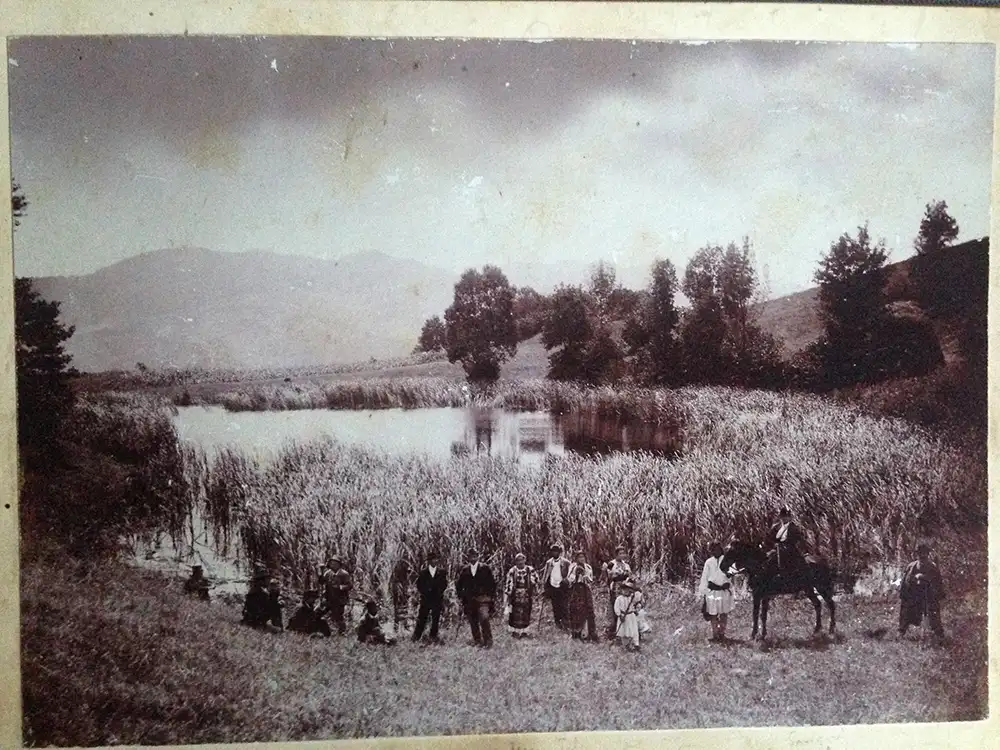
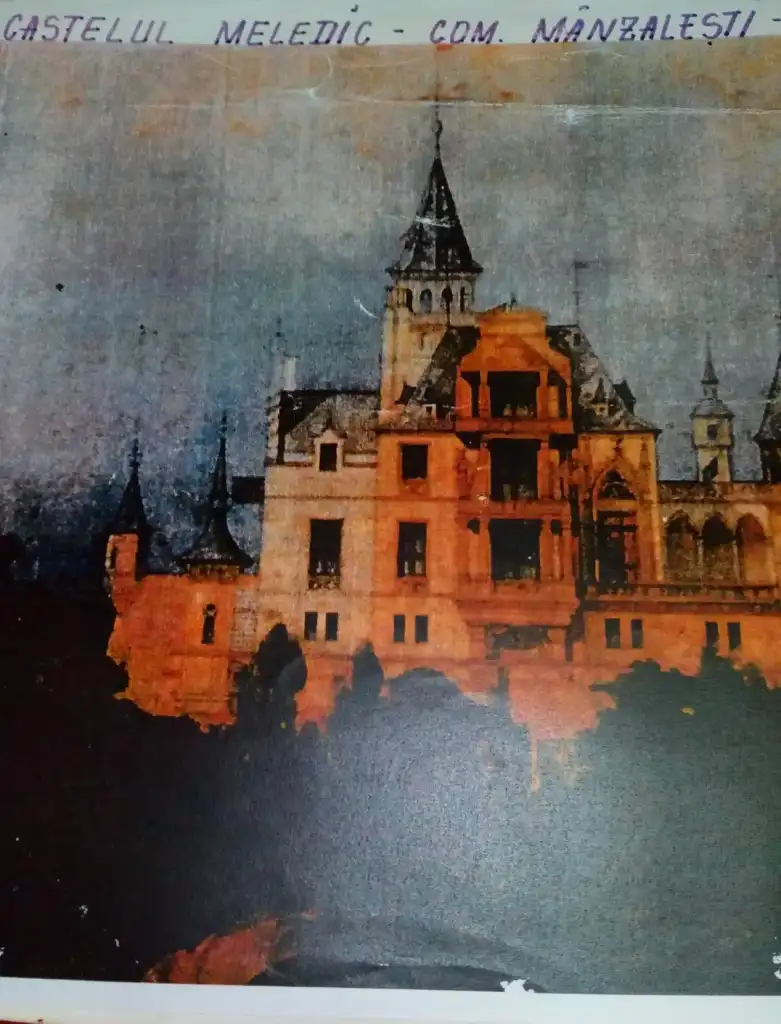
We are at Meledic, one of the widest openings in the Buzău Carpathians. The hill where we sit, a high summit from which we look down on the whole Meledic valley and the distant mountains around it, is called “Gruiul Haiducilor”, the Outlaws’ Hill. A proud castle rises on the edge of the lake, flowers surround us, the stars tremble in the lake, and down in the valley the waters of the Slănic softly murmur.
Read the rest
“Lord, what a beautiful country you have… Your land is truly a mother who spoils you: she gives you almost everything ready-made — and that is not always a good thing — she gives you with an open hand the tastiest fruit, the most sought-after grain in Europe, and wines that we in Paris talk about as if they came from fairy tales. Elsewhere you must toil and sweat, and wrestle with the soil to wrest a little of its wealth, not to mention the cold countries where the land is poor and people must ask the sea for the food the earth cannot give them. Here I have seen vast pastures left ungrazed, endless forests that seem to have grown only to adorn the mountains and shelter the wild animals, mounds of salt and rivers of oil that burst up from the depths of their own accord, impatient to come to you. Yesterday at Lopătari I fell to thinking when I saw those tongues of flame on the hill, transparent, trembling in the sunlight. I imagined… how can one not dream in a country like yours?… I imagined that on that hill of Smolean a town would rise, heated and lit by a gas so pure, filtered with such care and shared so generously by your good earth, and that all these mountains — the beautiful mountains of Buzău, which hold lakes, and amber, and gold — would suddenly open their hidden treasures and pour them over that town, over the whole country… What a divine night, and how it makes one want to talk and to dream!… Tell me honestly whether your homeland — which I imagine you must love dearly — does not often give you dreams like these, out of the Thousand and One Nights. In any case, admit that you are a happy people.”
“We ought to be. But I was telling you what a troubled history we have had: our whole life has been almost one long struggle, and the land of this country a field of plunder and slaughter. To this day our ploughmen turn up arrows where they plough, and rusty spurs and bits, and the bones of horses mixed with the bones of heroes. While you worked in peace and raised the altars of Western light, we stood guard — faithful, sleepless sentinels — at the gates of the Carpathians; we fought, poor souls, unknown and helped by no one, and with our blood we defended your holy and fruitful peace… The Guard dies — as they say in your proud language — but does not surrender. We were that guard! So you see that we are not quite strangers to you, and that we too, from afar, have added something to that great light towards which only now, for a few years, we can turn our faces and quench, in its brightness, our souls so thirsty, thirsty for centuries. Our people still live in fear of the dangers they have been through. They are not thrifty, because a thousand times they saved, and a thousand times they were robbed; they do not trust in human justice and order, because they have always trusted and always been deceived, by men and by fate alike. They are now, poor things, like a beaten child, a good, gentle child, gifted with the finest qualities — hidden treasures still sleep in their soul, as in the land on which they live — and on the day when, at peace and awakened to true life, they are called upon to show them, there will be no people in the world wiser, more generous and more capable than the Romanian people.”
A. de Richard’s book (1898)
The French engineer A. de Richard described Meledic, its waters, lakes and excursions in a book published in Bucharest in 1898. Read some extracts.